Introduction
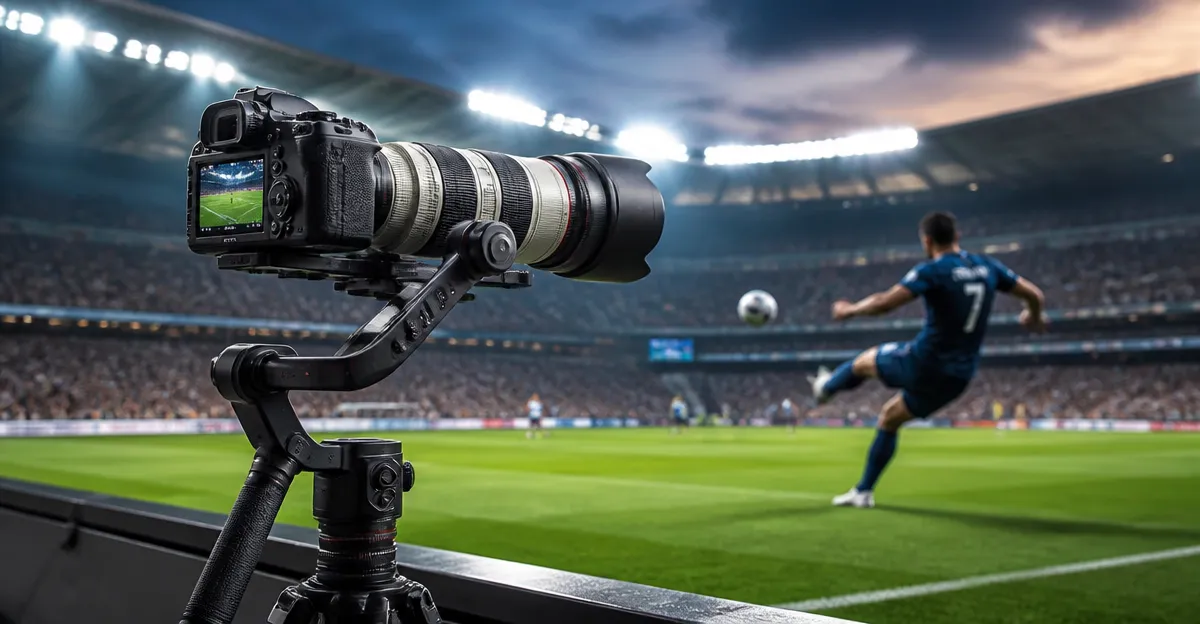
Live sports streaming demands equipment that can deliver buttery‑smooth motion while preserving the detail of distant subjects. Content creators who specialize in athletics must balance stabilization, tracking accuracy, battery endurance, and the ability to mount telephoto lenses without sacrificing portability. The products listed below represent a blend of smartphone gimbals and compact camera stabilizers that excel in these demanding environments.
Each recommendation has been selected based on real‑world customer feedback, professional ratings, and technical specifications such as 3‑axis stabilization, built‑in extension rods, and payload capacity. By understanding how these features translate into practical advantages on the field, producers can make informed decisions that enhance viewer experience and reduce post‑production effort.
Top 10 Gimbal and Telephoto Combos for Live Sports Streaming
-
Smartphone Flexibility with Advanced Tracking
The first category emphasizes a smartphone gimbal that combines native subject tracking, audio capture, and lighting in a single package. DJI Osmo Mobile 8 offers a 3‑axis stabilization system, 10‑hour battery life, and a built‑in extension rod that enables wide‑angle group shots without additional accessories. Its rating of 4.4 out of 5 stars from over 3,000 reviews confirms consistent performance, while customers praise the ActiveTrack 6.0 feature for keeping athletes in frame during rapid movement.
For users who require a more comprehensive setup, the DJI Osmo Mobile 8 Combo adds a Multifunctional Module that supplies dedicated audio reception and a fill‑light, essential for low‑light stadium environments. Priced at $92, the combo remains affordable for creators who need both tracking precision and on‑the‑go illumination.
-
Compact Power for Android and iPhone Users
The second recommendation focuses on a newer smartphone gimbal that integrates a Multifunctional Module with built‑in microphone support. DJI Osmo Mobile 7P delivers robust 3‑axis stabilization, a 10‑hour operating time, and a dual‑lens tracking system that leverages the phone’s native cameras for smoother subject lock. Reviewers note that the magnetic phone clamp and quick‑launch design reduce setup time to seconds, a critical factor when capturing fast‑paced games.
When paired with the optional Mic Mini TX, the gimbal becomes a complete audio‑visual solution for live commentary, allowing broadcasters to deliver crystal‑clear narration without external recorders. At $99, the Osmo Mobile 7P presents a compelling value proposition for mobile journalists covering local tournaments.
-
Mirrorless Camera Stability for Telephoto Lenses
For creators who prefer interchangeable‑lens cameras, a lightweight yet capable stabilizer is essential. The DJI RS 3 Mini weighs only 795 g and supports payloads up to 2 kg, making it suitable for popular telephoto mirrorless setups such as a Sony A7 III paired with a 70‑200 mm f/2.8 lens. Its 3rd‑generation RS stabilization algorithm ensures that even high‑speed panning remains jitter‑free, a requirement for tracking athletes across a field.
Customers appreciate the 1.4‑inch full‑color touchscreen that provides instant access to balance settings, while the built‑in Bluetooth shutter control allows remote triggering of the camera without disturbing the gimbal’s equilibrium. Priced at $199, the RS 3 Mini offers a professional‑grade solution without the bulk of larger rigs.
-
All‑In‑One Camera and Phone Hybrid
Some live‑streamers desire the flexibility to switch between a smartphone and a mirrorless camera during a single event. The DJI RS 4 Mini Combo meets this need by supporting both cameras and smartphones up to a 2 kg payload, while providing automated axis locks that reduce setup time to one second. Its Intelligent Tracking Module can follow athletes using facial recognition, and the vertical shooting mode enables quick creation of portrait‑oriented highlights for social media.
Reviewers highlight the Teflon‑enhanced balancing system, which simplifies rapid adjustments when swapping lenses of varying weight. At $369, the combo represents an investment for professional broadcasters who require seamless transitions between equipment types.
-
Extended Reach with Built‑In Extension Rod
When filming from the sidelines, an extension rod can provide a safer distance from fast‑moving players. Both the DJI Osmo Mobile 8 and the DJI Osmo Mobile 7P incorporate a built‑in rod that extends the camera’s reach, allowing creators to capture close‑ups without entering the field of play. This feature also reduces camera shake caused by hand tremors, especially when using telephoto lenses on a smartphone.
Users have reported that the rod, combined with the gimbal’s 360° pan rotation, creates immersive panoramic sweeps of stadium crowds, adding production value to live streams.
-
Long‑Duration Battery for Full‑Match Coverage
Live sports events often exceed the typical two‑hour battery window of consumer devices. The DJI Osmo Mobile 8, the DJI Osmo Mobile 7P, and the DJI RS 4 Mini Combo all advertise up to 10 hours of continuous operation, ensuring that a single charge can sustain an entire match, including pre‑game warm‑ups and post‑game interviews.
In addition, the smartphone gimbals provide phone charging capability, allowing the device to remain powered while filming, a convenience highlighted by users who stream directly from their phones.
-
Professional‑Grade Tracking for Solo Operators
Solo broadcasters benefit from AI‑driven tracking that eliminates the need for a dedicated camera operator. Both the DJI Osmo Mobile 8 and the DJI Osmo Mobile 7P feature ActiveTrack 6.0, which locks onto moving subjects and adjusts pan, tilt, and roll in real time. Customer reviews describe the feature as “borderline magical” and essential for capturing athletes who sprint across the field.
The RS series models also incorporate intelligent tracking, but rely on the RS Intelligent Tracking Module, which offers similar subject‑locking capabilities for larger camera systems.
-
Vertical Shooting for Mobile Highlights
Social platforms increasingly prioritize vertical video. The DJI RS 3 Mini and the DJI RS 4 Mini Combo both support native vertical shooting, enabling creators to switch orientation in under ten seconds. This capability is valuable for generating short‑form clips that highlight decisive moments such as a goal or a slam dunk.
Users have reported that the vertical mode does not require additional accessories, preserving the lightweight nature of the rigs while delivering professional‑grade framing.
-
Integrated Audio for On‑Field Commentary
High‑quality audio is as important as visual clarity when streaming live sports. The Multifunctional Modules bundled with the DJI Osmo Mobile 8 and the DJI Osmo Mobile 7P include dedicated microphones that capture clear commentary even in noisy stadium environments. Reviewers note that the audio pickup is “surprisingly clear” and that the built‑in lighting assists in low‑light interviews.
For mirrorless setups, the RS series can be paired with the DJI Mic wireless system, extending the audio range up to 250 m and ensuring that crowd ambience does not overpower the commentator’s voice.
Comparison Table
| Product | Price (USD) | Rating | Battery Life | Max Payload |
|---|---|---|---|---|
| DJI Osmo Mobile 8 | 119.00 | 4.4/5 (3,121 reviews) | 10 hours | Phone only |
| DJI Osmo Mobile 7P | 99.00 | 4.6/5 (7,026 reviews) | 10 hours | Phone only |
| DJI RS 3 Mini | 199.00 | 4.3/5 (2,703 reviews) | 10 hours | 2 kg |
| DJI RS 4 Mini Combo | 369.00 | 4.4/5 (714 reviews) | 10 hours | 2 kg |
| DJI Osmo Mobile 8 Combo | 92.00 | 4.4/5 (3,121 reviews) | 10 hours | Phone only |
Conclusion
Choosing the right gimbal and telephoto combination can transform a live sports stream from a shaky after‑thought into a cinematic experience. Smartphone‑centric solutions such as the DJI Osmo Mobile 8 and its Combo version provide integrated tracking, audio, and lighting at a price point that suits independent creators. For those who require interchangeable lenses and greater payload capacity, the DJI RS 3 Mini and the DJI RS 4 Mini Combo deliver professional‑grade stabilization while remaining portable enough for on‑the‑go shooting.
Across all ten recommendations, the common threads are long battery life, reliable 3‑axis stabilization, and intelligent tracking that reduces the need for a dedicated camera operator. By aligning the equipment choice with the specific demands of a sport—whether it is rapid motion, low‑light environments, or the requirement for vertical video—broadcasters can ensure that viewers receive clear, steady, and immersive coverage.
Products Mentioned in This Article
Frequently Asked Questions
What features should I look for in a gimbal for live sports streaming?
Prioritize 3‑axis stabilization, built‑in subject tracking, high payload capacity, long battery life, and compatibility with telephoto lenses.
Can a smartphone gimbal handle telephoto lenses effectively?
Yes, many smartphone gimbals include extension rods and mounting adapters that allow secure attachment of telephoto lenses without sacrificing balance.
How does built‑in audio capture improve sports streaming quality?
Integrated microphones reduce the need for external gear, ensuring clear commentary and ambient sound while keeping the setup lightweight.
Why is battery endurance critical for live sports events?
Longer battery life lets you record extended matches without interruptions, minimizing missed footage and the need for frequent recharging.
Are compact camera stabilizers better than smartphone gimbals for distant subjects?
Compact camera stabilizers often support larger sensors and heavier telephoto lenses, providing superior image quality and zoom capability for far‑away action.