Introduction
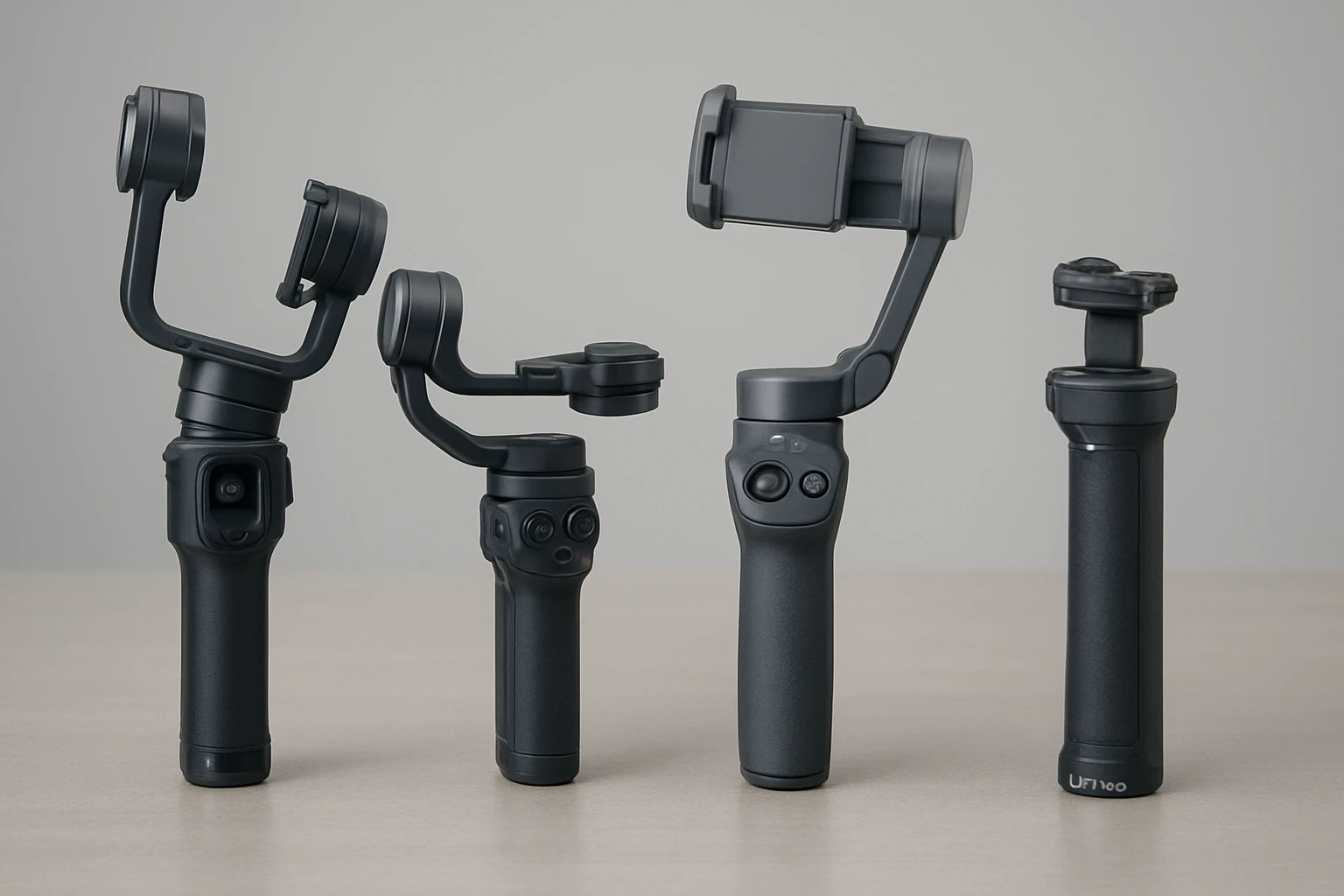
The market for handheld stabilisation devices has expanded rapidly, offering creators a range of tools from professional camera gimbals to compact phone mounts. This article compares five products that are currently available on Amazon: the DJI RS 4 Mini, the DJI RS 3 Mini, the DJI Osmo Mobile 7, the DJI Osmo Mobile 7P and the UURig Handheld Grip. Understanding the differences among these devices matters because each targets a distinct workflow, payload capacity and budget, and creators need objective data to select the tool that maximises productivity without overspending.
Individual Product Overviews
DJI RS 4 Mini
The RS 4 Mini is a compact three‑axis gimbal designed for mirrorless and DSLR cameras up to a 2 kg (4.4 lb) payload. It features auto‑axis locks that engage in one second, intelligent subject tracking, Teflon‑enhanced balancing and a rapid vertical‑mode switch that operates in ten seconds. Reviewers praise its durability and battery life; one professional videographer noted, "It is very durable… battery life on it is solid, I never ran out of battery on a single shoot". Priced at $349.00 it carries a 4.4‑star rating from 2,103 reviews.
DJI RS 3 Mini
The RS 3 Mini is a lighter sibling that weighs 795 g (1.75 lb) and supports the same 2 kg payload. It incorporates a 3rd‑generation stabilization algorithm, Bluetooth shutter control and native vertical shooting. Users highlight its metal construction and all‑day battery life; a reviewer wrote, "Battery life is great I can usually run it all day before charging". It is priced at $237.00 and holds a 4.3‑star rating from 2,303 reviews.
DJI Osmo Mobile 7
The Osmo Mobile 7 is a phone‑focused three‑axis gimbal weighing 300 g. It provides DJI’s 7th‑generation stabilization, ActiveTrack 7.0 and an integrated foldable tripod. Reviewers appreciate the ease of use and the dramatic improvement in video quality, with one user stating, "The stabilization is amazing. The tracking is amazing". It costs $59.00 and enjoys a 4.5‑star rating from 15,071 reviews.
DJI Osmo Mobile 7P
The Mobile 7P builds on the 7’s platform by adding a multifunctional module that supplies native tracking, lighting and audio reception. It also includes a built‑in extension rod and tripod. A reviewer commented, "It handles heavier phones like the Samsung S25 Ultra with no issue". The device is priced at $99.00 and carries a 4.5‑star rating from 4,957 reviews.
UURig Handheld Grip
The UURig Grip is a minimalist 1/4‑inch screw‑mounted handheld grip compatible with a wide range of cameras and action devices. It does not include a phone clamp, but its ergonomic shape and rubberised surface are praised for comfort during long shoots. One reviewer described it as "a total steal for those looking to save money". It is the most affordable item at $10.95 and holds a 4.6‑star rating from 461 reviews.
Head‑to‑Head Comparison
Price and Value
The RS 4 Mini commands the highest price at $349.00, reflecting its professional‑grade build and auto‑lock system. The RS 3 Mini offers a more budget‑friendly entry point at $237.00 while retaining a 2 kg payload capacity. The Osmo Mobile 7 provides the best value for phone creators at $59.00, and the 7P adds extra functionality for $40 more. The UURig Grip, at $10.95, delivers pure grip functionality at a fraction of the cost of any gimbal.
Features and Specifications
- Payload: RS 4 Mini and RS 3 Mini both support up to 2 kg; the phone gimbals support typical smartphone weights (≈0.2 kg).
- Weight: RS 4 Mini is heavier than RS 3 Mini (exact weight not listed but larger); RS 3 Mini weighs 795 g; Osmo Mobile 7 weighs 300 g; Osmo Mobile 7P similar weight with added module; UURig Grip weight is negligible.
- Auto‑axis locks: exclusive to RS 4 Mini, enabling one‑second setup.
- Intelligent tracking: RS 4 Mini, RS 3 Mini (via module) and both phone gimbals (ActiveTrack 7.0).
- Vertical shooting: native on RS 4 Mini, RS 3 Mini, Osmo Mobile 7 and 7P.
- Battery life: RS 4 Mini battery lasts through an 8‑hour wedding with a power bank; RS 3 Mini runs all day; Osmo Mobile 7 offers up to 10 hours; 7P similar.
- Additional accessories: RS 4 Mini combo includes tracking module and briefcase handle; 7P includes lighting and audio module.
Customer Ratings and Feedback
All products score above four stars, indicating strong satisfaction. The RS 4 Mini’s 4.4‑star rating reflects praise for durability and smooth balancing, with a few users requesting detachable batteries. The RS 3 Mini’s 4.3‑star rating includes positive remarks about build quality but also a notable negative review describing a roll‑motor failure after seven months. The Osmo Mobile 7 and 7P each hold 4.5 stars, with users highlighting the transformative effect on phone video quality and the usefulness of the built‑in tripod. The UURig Grip’s 4.6 stars stem from its low price and ergonomic design, though reviewers note the missing phone clamp.
Performance and Reliability
Professional camera gimbals (RS 4 Mini, RS 3 Mini) deliver cinema‑grade stabilization, with the RS 4 Mini’s Teflon‑enhanced bearings providing smoother adjustments. The RS 3 Mini’s metal construction yields a solid feel, yet a minority of users report motor stuttering. Phone gimbals excel in portability; the Osmo Mobile 7’s 3‑axis system smooths handheld footage, while the 7P’s added module improves lighting and audio capture for on‑the‑go interviews. The UURig Grip does not stabilise but offers a steady handheld platform for lightweight cameras.
Best Use Cases
- RS 4 Mini – Ideal for freelance videographers and small production teams that require rapid setup, auto‑locking and a payload capable of handling full‑frame mirrorless bodies with standard lenses.
- RS 3 Mini – Suited for travel creators and vloggers who need a lightweight yet powerful gimbal for mirrorless cameras without the extra bulk of the RS 4 Mini.
- Osmo Mobile 7 – Perfect for social‑media influencers, TikTok creators and casual filmmakers who shoot exclusively with smartphones.
- Osmo Mobile 7P – Best for content creators who need integrated lighting and audio while filming with larger smartphones or for on‑location interviews.
- UURig Grip – Excellent for DSLR or action‑camera users who already own a tripod and need a portable hand grip for quick, stable shots.
Comparison Table
| DJI RS 4 Mini | DJI RS 3 Mini | DJI Osmo Mobile 7 | DJI Osmo Mobile 7P | UURig Grip |
|---|---|---|---|---|
| Price: $349.00 | Price: $237.00 | Price: $59.00 | Price: $99.00 | Price: $10.95 |
| Payload: 2 kg (4.4 lb) | Payload: 2 kg (4.4 lb) | Payload: ~0.2 kg (phone) | Payload: ~0.2 kg (phone) | Payload: 1/4" screw (any camera) |
| Weight: larger than 795 g | Weight: 795 g | Weight: 300 g | Weight: ~300 g + module | Weight: negligible |
| Auto‑axis lock: Yes (1 s) | Auto‑axis lock: No | Auto‑axis lock: No | Auto‑axis lock: No | Auto‑axis lock: N/A |
| Intelligent tracking: Yes | Intelligent tracking: Yes (module) | ActiveTrack 7.0 | ActiveTrack 7.0 + dual‑lens | None |
| Battery life: >8 h (with power bank) | Battery life: All‑day | Battery life: 10 h | Battery life: 10 h | Battery life: None (pass‑through) |
| Rating: 4.4/5 (2,103) | Rating: 4.3/5 (2,303) | Rating: 4.5/5 (15,071) | Rating: 4.5/5 (4,957) | Rating: 4.6/5 (461) |
Pros & Cons
DJI RS 4 Mini
- Pros: Auto‑axis locks, high payload, robust build, excellent battery endurance, positive professional reviews.
- Cons: Higher price, battery is not detachable, larger footprint than RS 3 Mini.
DJI RS 3 Mini
- Pros: Lightweight, strong payload, metal construction, good battery life, lower price than RS 4 Mini.
- Cons: Reported roll‑motor reliability issue, no detachable battery.
DJI Osmo Mobile 7
- Pros: Very affordable, ultra‑light, integrated tripod, ActiveTrack 7.0, intuitive app integration.
- Cons: Limited to phone weight, tracking can be affected by phone placement, no built‑in lighting.
DJI Osmo Mobile 7P
- Pros: Adds lighting and audio module, handles larger phones, built‑in extension rod, same stabilization as 7.
- Cons: Higher price than standard 7, learning curve for module features.
UURig Handheld Grip
- Pros: Extremely low cost, universal 1/4" screw, ergonomic rubberised grip, compatible with many cameras.
- Cons: No stabilization, phone clamp not included, limited to handheld use.
Recommendations by Use Case
For professional videographers who need rapid setup and a sturdy platform for full‑frame mirrorless cameras, the DJI RS 4 Mini is the most appropriate choice. Travel‑focused creators who prioritize weight over auto‑locking should consider the DJI RS 3 Mini. Social‑media influencers shooting exclusively with smartphones will find the best value in the DJI Osmo Mobile 7. Those who need additional lighting and audio for interviews should select the DJI Osmo Mobile 7P. Finally, creators who already own a tripod and require a simple hand grip for lightweight cameras can benefit from the UURig Handheld Grip.
Frequently Asked Questions
- Can the RS 4 Mini be used with a full‑frame DSLR? Yes, the RS 4 Mini supports cameras up to a 2 kg payload, which includes many full‑frame DSLRs with standard lenses.
- Is the battery on the RS 3 Mini removable? No, the battery is integrated and not designed for hot‑swap; users must charge the unit via its USB‑C port.
- Does the Osmo Mobile 7P work with iPhone 16 Pro Max? The built‑in magnetic mount fits most smartphones; however, some users report that the strongest iPhone models may require additional spring force to secure properly.
- What is the warranty coverage for these DJI products? DJI provides a standard one‑year limited warranty for all gimbals purchased through Amazon, provided the serial number is registered.
- Can the UURig Grip be attached to a tripod? Yes, the grip includes a standard 1/4" screw that can be mounted on most tripod heads for added stability.
- Is there a difference in tracking accuracy between the RS 4 Mini and the phone gimbals? The RS 4 Mini uses a dedicated Intelligent Tracking Module that tracks faces and bodies with high precision, while the phone gimbals rely on ActiveTrack 7.0, which is excellent for mobile but may be less robust under low‑light conditions.
- Which device offers the longest continuous operation time? The Osmo Mobile 7 and 7P both advertise up to 10 hours of use on a single charge, slightly longer than the RS 3 Mini’s all‑day claim and comparable to the RS 4 Mini when paired with a power bank.
Conclusion
All five products deliver strong performance within their intended categories. The DJI RS 4 Mini stands out as the premium choice for professional camera work, while the RS 3 Mini offers a lighter, more affordable alternative. For smartphone creators, the Osmo Mobile 7 provides exceptional value, and the 7P extends that value with lighting and audio capabilities. The UURig Grip, though not a stabilizer, offers a cost‑effective solution for handheld shooting. Based on the data, the recommended hierarchy is: RS 4 Mini for high‑end video production, RS 3 Mini for travel videography, Osmo Mobile 7 for budget‑conscious mobile creators, Osmo Mobile 7P for mobile creators needing extra modules, and UURig Grip for supplemental handheld support.