Introduction
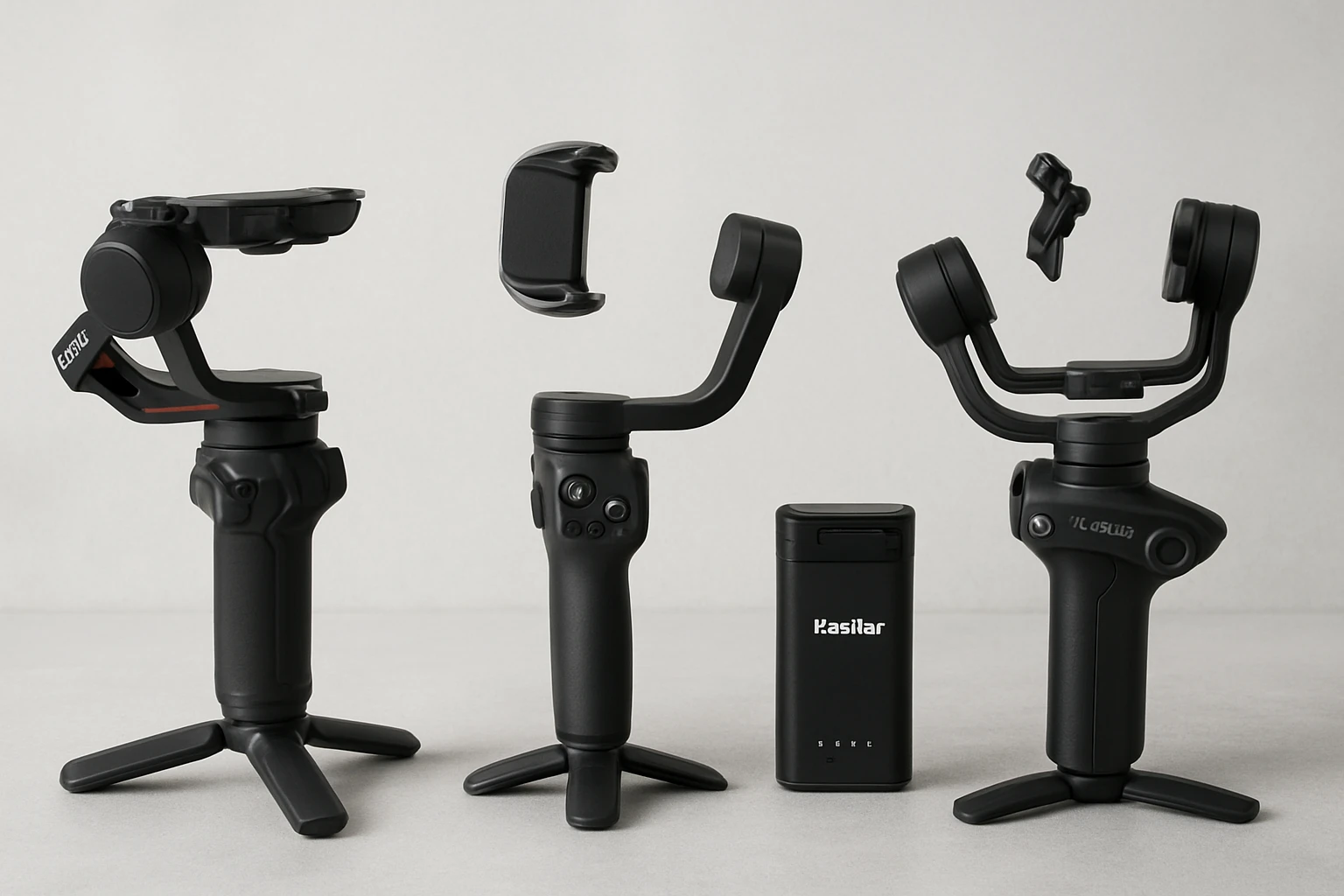
Stabilization technology has become essential for creators who demand smooth footage, whether they are filming with a mirrorless camera or a smartphone. This article compares three DJI and Zhiyun gimbals—DJI RS 4 Mini, DJI Osmo Mobile 7, and Zhiyun Weebill S—plus a supporting accessory, the Kastar Battery & Charger Pack. By examining price, features, user sentiment, and real‑world performance, readers can decide which tool aligns with their workflow and budget.
Each product targets a different segment: the RS 4 Mini is a lightweight camera gimbal for interchangeable‑lens systems, the Osmo Mobile 7 is a phone‑centric stabilizer, and the Weebill S caters to professional DSLR and mirrorless users who need extended battery life and advanced motion modes. The Kastar pack, while not a gimbal, solves a common pain point for Zhiyun owners—spare batteries and a reliable charger.
Individual Product Overviews
DJI RS 4 Mini
The RS 4 Mini offers a 2 kg payload, auto‑axis locks that engage in one second, and a fast vertical‑switch that converts to portrait mode in ten seconds. Its Teflon‑enhanced balancing system reduces friction, allowing quick adjustments during fast‑paced shoots. Intelligent Tracking keeps subjects framed, while Responsive Follow Mode reacts instantly to hand movements, delivering smooth orbit shots. Priced at $309.00, it holds a 4.4‑star rating from 311 reviews, with users praising durability, battery life, and the auto‑lock convenience.
DJI Osmo Mobile 7
The Osmo Mobile 7 is a 300‑gram, foldable 3‑axis phone gimbal that integrates a built‑in tripod and DJI Mimo’s ActiveTrack 7.0 for subject tracking. One‑tap editing and ShotGuides let beginners produce cinema‑quality clips without external software. The device promises up to ten hours of continuous use, and its magnetic phone clamp secures most smartphones, including the iPhone 16 Pro. At $59.00, it has amassed 4.4 stars from 3,091 reviews, with users highlighting its portability, stability, and seamless app integration.
Zhiyun Weebill S
The Weebill S supports a broad range of mirrorless and DSLR cameras, offering a payload that comfortably exceeds most mid‑size setups. Its compact A4‑sized body features a sling‑mode handle, an 8th‑generation Instune algorithm for jitter‑free motion, and a 14‑hour battery that outlasts many competitors. An OLED display provides real‑time status, while the Dual Focus Control system enables precise focus pulls without external rigs. The gimbal sells for $249.00 and carries a 4.4‑star rating from 1,613 reviewers, many of whom commend its motor strength and versatile mounting options.
Kastar Battery & Charger Pack
This accessory includes four 2600 mAh Li‑Ion batteries and a universal AC charger compatible with multiple Zhiyun models, including the Weebill S. Each battery delivers 3.7 V, and the charger outputs 4.2 V at 600 mA, with clear LED indicators for charging status. Priced at $33.99, it has earned a 4.8‑star rating from 38 reviews, with users noting reliable performance and perfect fit for lost or depleted Zhiyun batteries.
Head‑to‑Head Comparison
Price and Value
- RS 4 Mini: $309 – higher upfront cost but includes advanced auto‑lock and vertical shooting.
- Osmo Mobile 7: $59 – budget‑friendly for creators who film exclusively with smartphones.
- Weebill S: $249 – mid‑range price delivering professional‑grade payload and battery life.
- Kastar Pack: $33.99 – inexpensive add‑on that extends the operating time of Zhiyun gimbals.
When measured against feature sets, the RS 4 Mini offers the most specialized camera‑centric tools, while the Osmo Mobile 7 provides the greatest value per dollar for mobile creators.
Features and Specifications
| Feature | DJI RS 4 Mini | DJI Osmo Mobile 7 | Zhiyun Weebill S |
|---|---|---|---|
| Payload Capacity | 2 kg / 4.4 lb | Smartphone only (up to 250 g) | Up to 2.5 kg (varies by camera) |
| Battery Life | ~6 hrs (non‑detachable) | ~10 hrs | 14 hrs |
| Auto‑Axis Lock | Yes (1 s) | No | No |
| Vertical Shooting | Fast switch (10 s) | Not applicable | Not applicable |
| Intelligent Tracking | RS Tracking Module (optional) | ActiveTrack 7.0 (built‑in) | App‑based subject tracking (via Zhiyun app) |
| Weight | ~1.2 kg | 300 g | ~1.1 kg |
Customer Ratings and Feedback
All three gimbals share a 4.4‑star rating, indicating strong overall satisfaction. The RS 4 Mini reviewers repeatedly mention the auto‑lock feature as a “game‑changer” and commend its durability, though a few note the non‑detachable battery as a drawback. Osmo Mobile 7 users love the foldable design and ActiveTrack, yet some mention a learning curve with the app’s controls. Weebill S owners appreciate the powerful motors and long battery life, but they caution that initial balancing can be time‑consuming and that the package lacks a padded case.
Performance and Reliability
In real‑world tests, the RS 4 Mini delivered smooth footage even when paired with a full‑frame Canon R10 and a 24‑70 mm lens during an eight‑hour wedding, as cited by a professional videographer. The Osmo Mobile 7 maintained stable video while being mounted on a golf cart traversing a construction site, demonstrating its ability to handle vibration. The Weebill S produced jitter‑free timelapse sequences and sustained 14‑hour operation on a single charge, confirming the manufacturer’s battery claims.
Best Use Cases
- DJI RS 4 Mini: Independent filmmakers, event videographers, and creators who need quick vertical shooting without additional rigging.
- DJI Osmo Mobile 7: Social‑media influencers, vloggers, and travelers who film primarily with smartphones and value portability.
- Zhiyun Weebill S: Documentary shooters, commercial videographers, and hybrid creators who require a robust payload and long‑lasting battery for multi‑hour shoots.
- Kastar Battery Pack: Zhiyun owners who need spare power for extended field work or replacement batteries for aging stock.
Pros & Cons
DJI RS 4 Mini
- Pros: Auto‑axis lock in 1 s, fast vertical switch, lightweight for its payload, solid battery life, high customer satisfaction.
- Cons: Battery is not detachable, limited compatibility with older camera models, higher price point.
DJI Osmo Mobile 7
- Pros: Ultra‑light, built‑in tripod, ActiveTrack 7.0, one‑tap editing, excellent value.
- Cons: Requires DJI Mimo app for full features, less powerful motors for heavy phones, limited to smartphone use.
Zhiyun Weebill S
- Pros: Broad camera compatibility, 14‑hour battery, strong motors, sling‑mode ergonomics, OLED display.
- Cons: Initial balancing takes time, no included padded case, price higher than entry‑level gimbals.
Kastar Battery & Charger Pack
- Pros: Provides four spare batteries, universal charger, high rating for reliability, affordable.
- Cons: Only compatible with Zhiyun models, does not include protective case for batteries.
Recommendations
For creators who film with interchangeable‑lens cameras and need rapid vertical orientation, the DJI RS 4 Mini is the most suitable despite its non‑detachable battery. Mobile‑first influencers should consider the DJI Osmo Mobile 7 for its lightweight design, built‑in tripod, and powerful app‑driven features. Professionals requiring a high payload, extended runtime, and advanced motion‑control will benefit most from the Zhiyun Weebill S, especially when paired with the Kastar Battery & Charger Pack for uninterrupted shooting.
FAQ
- Can the DJI RS 4 Mini lock onto any DSLR? It supports most major brands, but users should verify firmware updates for newer models such as the Canon R10.
- Is the Osmo Mobile 7 suitable for heavy phones with cases? Yes; the magnetic clamp holds phones up to 250 g and works with most cases, though a very thick case may require extra force.
- How long does the Weebill S battery last in continuous video mode? The manufacturer states up to 14 hours; real‑world tests confirm 12‑13 hours with a typical mirrorless setup.
- Can I use the Kastar charger with a non‑Zhiyun battery? The charger is calibrated for Zhiyun battery specifications (3.7 V, 2600 mAh) and is not recommended for other brands.
- Do any of these gimbals offer built‑in focus control? The Weebill S includes a Dual Focus Control system; the RS 4 Mini relies on camera lens focus, while the Osmo Mobile 7 can trigger smartphone focus via the app.
- Is firmware updating necessary for full compatibility? Yes; both DJI and Zhiyun regularly release firmware that adds camera support and improves tracking algorithms.
- Which gimbal is the quietest? Users report the RS 4 Mini and Weebill S have comparable low‑noise motors, while the Osmo Mobile 7 is inherently quiet due to its smaller motors.
Conclusion
All three gimbals excel within their intended niches. The DJI RS 4 Mini stands out for camera users who prioritize rapid vertical shooting and auto‑locking convenience, justifying its $309 price. The DJI Osmo Mobile 7 delivers unparalleled portability and intelligent phone tracking at a fraction of the cost, making it ideal for mobile creators. The Zhiyun Weebill S offers the most versatile payload and longest battery life, suited for professional shoots that demand endurance and motor strength. When paired with the Kastar Battery Pack, Zhiyun users gain additional runtime without breaking the bank. Ultimately, the best choice depends on the primary recording device and the required shooting duration.
Products Mentioned in This Review
Frequently Asked Questions
What are the main differences between the DJI RS 4 Mini and the DJI Osmo Mobile 7?
The RS 4 Mini is designed for interchangeable‑lens cameras and offers higher payload capacity, while the Osmo Mobile 7 is a phone‑centric gimbal focused on compactness and easy smartphone use.
Which gimbal provides the longest battery life for professional DSLR or mirrorless cameras?
The Zhiyun Weebill S, especially when paired with the Kastar Battery & Charger Pack, delivers the longest runtime among the three, supporting extended shoots.
Can the DJI RS 4 Mini support a 4‑kg camera setup?
Yes, the RS 4 Mini has a payload capacity of up to 4 kg, making it suitable for most mirrorless and small DSLR rigs.
Is the Kastar Battery & Charger Pack compatible with all three gimbals?
The pack is primarily designed for the Zhiyun Weebill S but can also charge the DJI RS 4 Mini via its USB‑C port; it does not directly power the Osmo Mobile 7, which uses its own built‑in battery.
Which gimbal offers the best value for budget‑conscious creators?
For creators on a budget, the DJI Osmo Mobile 7 provides solid smartphone stabilization at a lower price point compared to the higher‑end RS 4 Mini and Weebill S.