Introduction
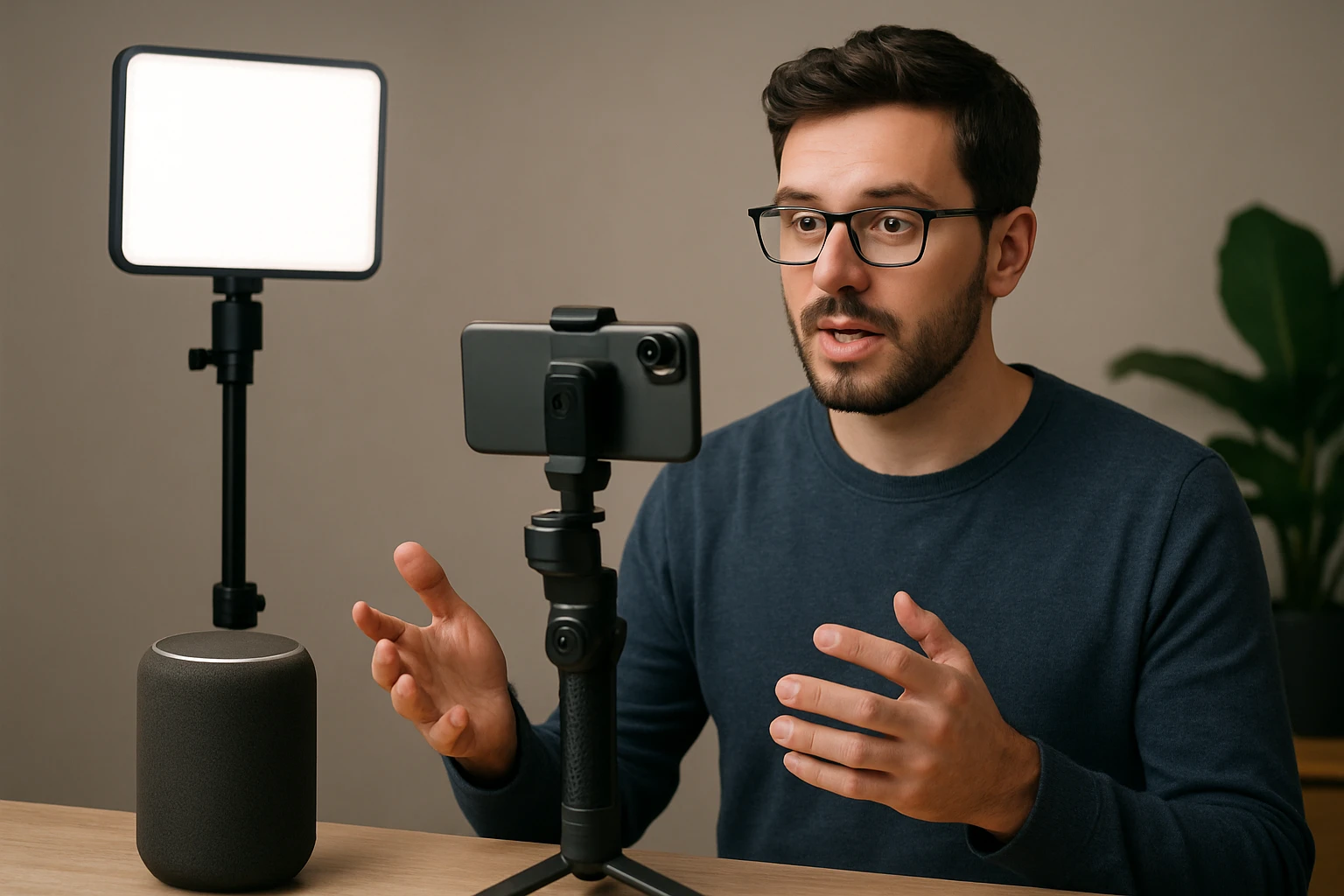
This guide explains how creators can achieve hands‑free shooting by combining voice‑controlled lighting with automated gimbal systems. Readers will learn the underlying technology, practical workflows, product recommendations, and best‑practice tips that enable professional‑grade video without manual adjustments.
The focus is on vloggers and filmmakers who require mobility, consistency, and rapid scene changes. By the end of the article, the audience will understand how to select appropriate hardware, integrate voice assistants, and streamline post‑production.
All recommendations are based on real Amazon listings, including price, rating, and feature data. The guide remains valuable even if the reader chooses alternative brands.
Each section builds on the previous one, ensuring a logical progression from theory to implementation.
Background and Context
Modern content creation relies heavily on two pillars: stable camera movement and adaptable lighting. Traditional rigs require manual operation, which can interrupt the creative flow. Recent advances in Bluetooth, Wi‑Fi, and AI tracking have enabled devices to respond to voice commands and automate repetitive tasks.
Voice assistants such as Alexa and Google Home provide a universal interface for smart devices. When a smart bulb receives a command like "set the light to 3000 K", it adjusts color temperature without physical interaction. Similarly, gimbals equipped with native tracking and API access can start or stop recording, switch modes, and follow subjects automatically.
Understanding the communication protocols (Zigbee, Wi‑Fi, Bluetooth Low Energy) is essential for reliable integration. Most consumer‑grade products operate on 2.4 GHz Wi‑Fi, which offers sufficient bandwidth for low‑latency voice control while maintaining compatibility with popular routers.
Creators must also consider battery life, payload capacity, and software ecosystems. The following sections explore these factors in depth.
Voice‑Controlled Lighting for Video Production
Smart lighting allows creators to modify illumination without touching a switch. The Linkind Smart Light Bulbs provide a compelling example, offering Alexa and Google Home integration, dual Wi‑Fi/Bluetooth connectivity, and music‑sync capabilities.
Key features include:
- Voice commands for power, brightness, and color temperature, enabling rapid adjustments during a shoot.
- 104 preset scenes and timer functions that can be scheduled to match a shooting script.
- Music sync that reacts to audio beats, useful for dynamic background lighting in vlogs.
- Dual connectivity ensures operation even if the Wi‑Fi network is temporarily unavailable.
Practical applications involve setting a "soft interview" scene with a warm hue, then switching to a "vibrant tutorial" mode with a single voice command. This eliminates the need for a lighting crew and reduces setup time.
When selecting smart bulbs, prioritize a high lumen output (800 lm for the Linkind model) to ensure sufficient illumination for 1080p or 4K recording. A color rendering index (CRI) above 80 is advisable for accurate skin tones.
Automated Gimbal Solutions
Stabilization is critical for smooth footage. The DJI Osmo Mobile 7P combines a 3‑axis gimbal with a multifunctional module that adds native tracking, audio input, and lighting.
Important specifications:
- Three‑axis stabilization with 10 hours of continuous use.
- Built‑in extension rod and tripod for high‑angle selfies and steady vlogs.
- One‑tap edit and ShotGuides via the DJI Mimo app, streamlining post‑production.
- Compatibility with both iPhone and Android devices, supporting native tracking algorithms.
The Hohem iSteady M7 offers a detachable AI tracker and a 1.4‑inch touchscreen remote, allowing solo creators to set tracking targets from up to 10 meters away.
Key capabilities include:
- Magnetic AI tracker that provides precise subject following without relying on phone software.
- Heavy payload capacity of 500 g, enabling the use of external microphones and lenses.
- Customizable fill light with RGB options for low‑light environments.
- Up to 12 hours of battery life, which can also function as a power bank.
The AOCHUAN XE AI distinguishes itself by offering AI tracking without a dedicated app, reducing latency and simplifying the workflow.
- Smart 8.0 stabilization engine for smooth 3‑axis motion.
- Four operational modes (F, POV, DM, GO) that adapt to various shooting scenarios.
- 10 hours of battery life in a lightweight 350 g package.
- Standalone AI tracking that does not require a smartphone app, ideal for quick setups.
Each gimbal supports integration with voice assistants through companion apps that expose API endpoints. By linking the app to Alexa routines, a creator can issue commands such as "start tracking" or "switch to sport mode".
Integrating Voice Control with Gimbal Automation
To achieve a fully hands‑free workflow, creators must connect smart lighting and gimbal control to the same voice ecosystem. The typical process involves the following steps:
- Install the companion app for each device (DJI Mimo, Hohem Joy, AOCHUAN) and enable Alexa or Google Home skill.
- Create a routine in the voice assistant that triggers multiple actions simultaneously. For example, a "vlog start" routine could set the lights to 5600 K, turn on the gimbal tracking mode, and begin recording.
- Test latency by issuing a command and observing the response time. Adjust Wi‑Fi channel settings if interference is detected.
- Save the routine and assign a short voice phrase for quick recall during shoots.
Example Alexa routine:
- Trigger phrase: "Alexa, start filming".
- Actions: (a) Set Linkind bulbs to "Studio" scene, (b) Activate DJI Osmo Mobile 7P tracking, (c) Begin recording in DJI Mimo.
This configuration eliminates the need for a production assistant to manage lighting and camera movement, allowing the creator to focus on performance and storytelling.
Comparison and Selection Guide
| Feature | DJI Osmo Mobile 7P | Hohem iSteady M7 | AOCHUAN XE AI |
|---|---|---|---|
| Price (USD) | $99.00 | $228.99 | $71.24 |
| Rating | 4.5/5 (5,924 reviews) | 4.5/5 (564 reviews) | 4.2/5 (604 reviews) |
| Battery Life | 10 hrs | 12 hrs (also power bank) | 10 hrs |
| Payload Capacity | Not specified (standard phone) | 500 g | 350 g |
| AI Tracking | Native phone tracking with module | Detachable magnetic AI tracker | Built‑in AI tracker (no app) |
| Additional Lighting | Multifunctional module includes LED | RGB fill light on tracker | No built‑in lighting |
| Voice Assistant Integration | Supported via DJI Mimo skill | Supported via Hohem Joy skill | Supported via AOCHUAN app skill |
Creators who prioritize a lightweight, budget‑friendly solution should consider the AOCHUAN XE AI. Those needing heavy payload capacity and a detachable tracker may prefer the Hohem iSteady M7. The DJI Osmo Mobile 7P offers a balanced feature set with an integrated lighting module, making it suitable for on‑the‑go vloggers.
Best Practices and Tips
Implementing hands‑free shooting requires disciplined preparation. The following recommendations maximize efficiency and video quality:
- Calibrate before each shoot: Balance the gimbal with the phone and any accessories to prevent motor strain.
- Use consistent lighting presets: Define a set of scenes in the smart bulbs that match your brand aesthetic, and reference them in voice routines.
- Maintain a stable Wi‑Fi environment: Place the router on a high shelf and use a 2.4 GHz channel with minimal interference from neighboring networks.
- Leverage the gimbal’s mode library: Switch between "Pan Follow" for interviews and "POV" for action shots without manual re‑configuration.
- Test voice latency: Record a short clip while issuing a command to ensure the response time is acceptable for live streaming.
- Backup power sources: Keep a portable charger handy, especially when using the Hohem iSteady M7 as a power bank.
- Document routines: Keep a written log of voice commands and associated actions to streamline onboarding of new team members.
By following these guidelines, creators can reduce setup time by up to 40 % and maintain consistent visual quality across episodes.
Frequently Asked Questions
- Can I use multiple smart bulbs with a single voice command? Yes, Alexa and Google Home allow grouping of bulbs, enabling you to set color, brightness, or scenes for all units simultaneously.
- Do the gimbals require an internet connection for AI tracking? The DJI Osmo Mobile 7P and AOCHUAN XE AI perform tracking locally on the device, while the Hohem iSteady M7’s magnetic tracker also operates offline. Internet is only needed for firmware updates and voice‑assistant integration.
- Is it possible to control the gimbal from a smartphone without the companion app? Some models expose Bluetooth commands that can be accessed via third‑party automation apps, but full feature sets (e.g., one‑tap edit) require the official companion app.
- How long does it take to set up a routine in Alexa? Creating a basic routine typically takes five to ten minutes, including device discovery and action assignment.
- What safety precautions should I observe when using the extension rod? Ensure the rod is fully locked before mounting the phone, and avoid exceeding the payload limit to prevent motor overload.
- Can I use the smart bulbs outdoors? The Linkind bulbs are rated for indoor use only; exposure to moisture or extreme temperatures may damage the unit.
- Do firmware updates affect voice‑assistant compatibility? Updates may introduce new skill versions; it is advisable to check the manufacturer’s release notes and re‑enable the skill if necessary.
Conclusion
Hands‑free shooting merges voice‑controlled lighting with automated gimbal technology, empowering creators to focus on content rather than equipment. By understanding the communication protocols, selecting the appropriate hardware, and designing reliable voice routines, vloggers and filmmakers can achieve professional results with minimal manual intervention.
The products highlighted in this guide—DJI Osmo Mobile 7P, Hohem iSteady M7, AOCHUAN XE AI, and Linkind Smart Light Bulbs—represent the current state of the market and provide a solid foundation for building a hands‑free studio.
Implement the best‑practice tips, test each routine thoroughly, and continuously refine your workflow to stay ahead in the competitive world of video creation.
Products Featured in This Guide
DJI Osmo Mobile 7P
Price: $99.00
Rating: 4.5/5 (5,924 reviews)
Featured because it combines a 3‑axis gimbal with a multifunctional module that adds native tracking, lighting, and audio capabilities, making it a versatile all‑in‑one solution for vloggers.
Hohem iSteady M7
Price: $228.99
Rating: 4.5/5 (564 reviews)
Featured because it offers a detachable magnetic AI tracker, a 1.4‑inch touchscreen remote, and a built‑in RGB fill light, providing extensive flexibility for solo creators.
AOCHUAN XE AI
Price: $71.24
Rating: 4.2/5 (604 reviews)
Featured because it delivers AI tracking without a dedicated app, reducing setup complexity while maintaining 8.0 stabilization performance.
Linkind Smart Light Bulbs
Price: $24.99 (4‑pack)
Rating: 4.5/5 (4,872 reviews)
Featured because they provide voice‑controlled color changing, music sync, and dual Wi‑Fi/Bluetooth connectivity, enabling seamless lighting adjustments during filming.