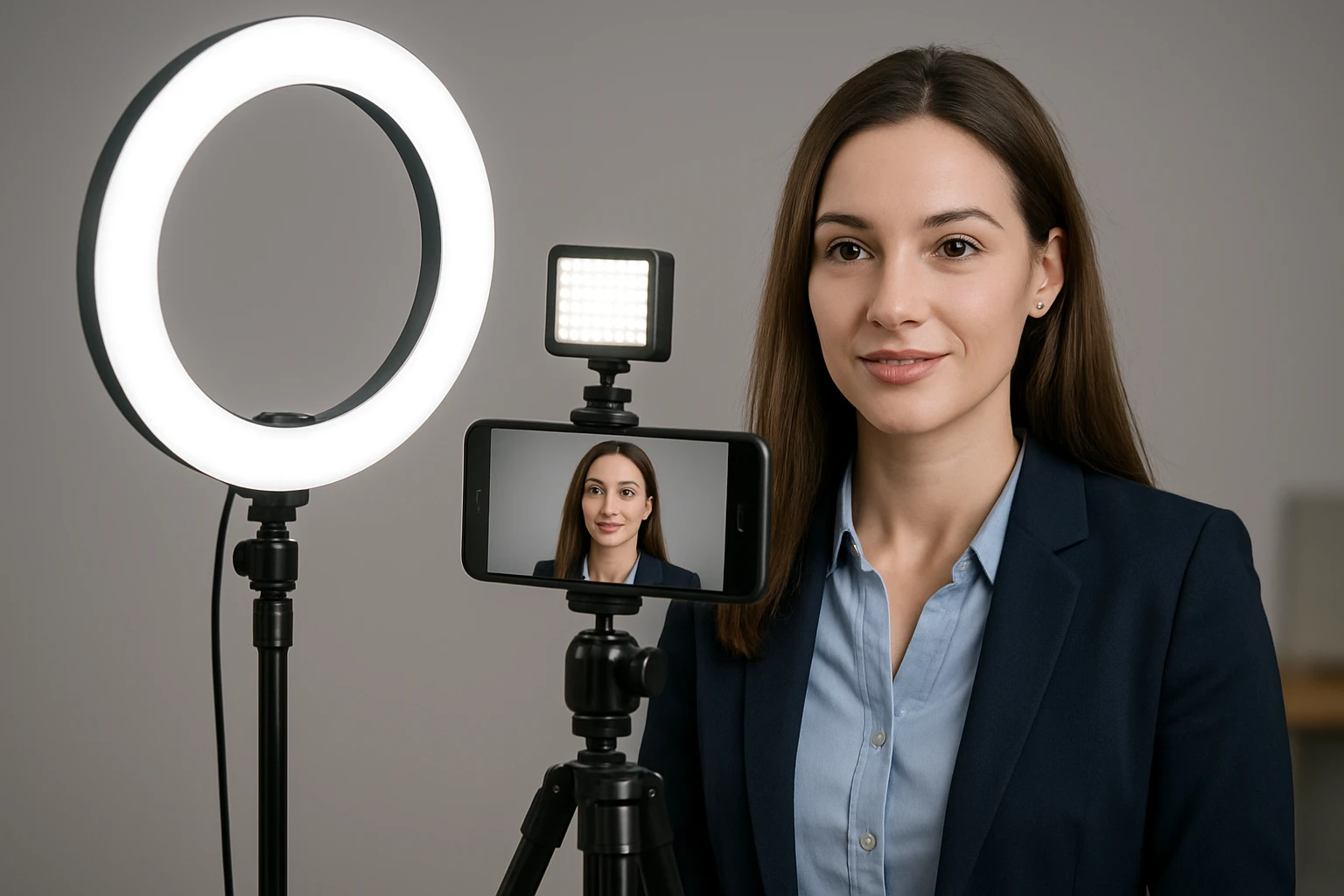
Smartphone Interview Lighting Setup: The Complete Guide for Remote Journalists
Introduction
Remote journalism demands clear visual communication, yet many reporters rely on built‑in phone cameras that suffer in low‑light environments. This guide explains how one can transform a smartphone into a professional interview tool by mastering lighting fundamentals and selecting appropriate accessories. Readers will learn the physics of light, how to position illumination sources, and which affordable products deliver consistent results. By the end of the article, one will be equipped to produce broadcast‑quality video without leaving the home office.
Background and Context
Effective interview lighting rests on three principles: direction, quality, and color temperature. Direction refers to where light originates relative to the subject, influencing shadows and facial definition. Quality describes the softness or harshness of the light, which is controlled by diffusion and size of the source. Color temperature, measured in Kelvin, determines whether the light appears warm (lower Kelvin) or cool (higher Kelvin), affecting skin tone realism. Understanding these concepts enables a journalist to adapt to varied interview settings, from cramped kitchen tables to spacious conference rooms.
Smartphones now incorporate high‑resolution sensors, but they lack the dynamic range of dedicated cameras. Supplemental lighting compensates for this limitation by providing even illumination that reduces noise and preserves detail. Modern LED accessories are lightweight, battery‑powered, and compatible with most devices, making them ideal for field reporters and home‑based interviewers alike.
Key Lighting Strategies for Smartphone Interviews
One should begin by establishing a three‑point lighting setup whenever space permits. The key light is placed at a 45‑degree angle from the interviewee’s face, delivering the primary illumination. A fill light, positioned opposite the key, softens shadows without overpowering the subject. Finally, a backlight or hair light separates the subject from the background, adding depth.
When space is limited, a single versatile light can emulate three‑point lighting by using adjustable brightness and color temperature. The following products excel in this role because they combine clip‑on flexibility with tripod mounting options.
- Singwil Clip-On Selfie Light – a compact LED panel with 120 diodes, 3 lighting modes, and a 5000 mAh rechargeable battery.
- Weilisi 10.5" Ring Light – a larger ring with 10 brightness levels, 3 color temperatures, and a wireless remote for distant operation.
- UBeesize 12" Ring Light – a powerful 240‑LED ring offering 10 brightness steps and a 62‑inch extendable tripod.
Each device can be mounted on a smartphone, tablet, or camera via a 1/4‑inch thread, allowing one to position the light precisely. By adjusting the clip angle up to 120°, the Singwil light can serve as both key and fill source without additional equipment.
Product Recommendations Integrated with Lighting Techniques
1. Singwil Clip-On Selfie Light with Tripod Adapter
The Singwil light provides 120 high‑brightness LEDs with a color rendering index (CRI) of 95+, ensuring natural skin tones. Its three modes—cool, warm, and a combined cool‑warm—cover a temperature range from 2500 K to 9000 K, allowing one to match ambient lighting conditions. The built‑in 5000 mAh battery delivers up to two hours of maximum output and fifteen hours at minimum brightness, which is sufficient for extended interview sessions.
Key specifications:
- 120 LEDs with adjustable brightness
- Color temperature: 2500 K–9000 K
- CRI ≥ 95 for accurate color reproduction
- 5000 mAh rechargeable battery (full charge in 2 hours)
- 1/4‑inch tripod thread for versatile mounting
- Rating: 4.5/5 from 655 reviews
- Price: $18.98
Because the clip rotates 120°, one can attach the light to the rear camera for a key light while using the front camera for framing. The anti‑slip design prevents accidental detachment during on‑location shoots.
2. Weilisi 10.5" Ring Light with Tripod & Remote
The Weilisi ring delivers a full‑screen lighting panel that exceeds typical ring dimensions, producing a broader, softer fill. Ten brightness levels (10 %–100 %) and three color temperatures (3000 K, 4500 K, 6000 K) enable precise control over the visual mood. A wireless remote extends control up to 30 feet, allowing the journalist to adjust settings without interrupting the interview flow.
Key specifications:
- 10‑level brightness control
- Three color temperatures: 3000 K–6000 K
- Adjustable tripod height: 39–69 inches
- Standard 1/4‑inch screw mount
- Wireless remote (30 ft range)
- Rating: 4.5/5 from 963 reviews
- Price: $38.99
The 360° rotation of the ring head and the 1/4‑inch thread make it suitable for both smartphone and DSLR setups, granting flexibility for multi‑camera interviews.
3. UBeesize 12" Ring Light with 62" Tripod Stand
The UBeesize model offers 240 LEDs delivering 10 W of output, roughly 25 % more power than standard 10‑inch rings. Ten brightness steps and five color temperature options (3000 K–6000 K) provide granular control, while the 62‑inch extendable tripod doubles as a selfie stick for dynamic angle changes. Included Bluetooth remote simplifies on‑the‑fly adjustments, a feature valued by interviewers who must remain in frame.
Key specifications:
- 240 LEDs, 10 W total power
- 10 brightness levels (10 %–100 %)
- 5 color temperature presets (3000 K–6000 K)
- 62‑inch extendable tripod, convertible to selfie stick
- 360° rotatable head
- Bluetooth remote control
- Rating: 4.4/5 from 98,300 reviews
- Price: $30.47
This ring light excels in studio‑like environments where a large, even illumination field is required, such as virtual press conferences or multi‑person panels.
Comparison and Selection Guide
Choosing the right lighting accessory depends on interview format, budget, and portability requirements. The table below summarizes the three products against common criteria.
| Feature | Singwil Clip-On | Weilisi 10.5" Ring | UBeesize 12" Ring |
|---|---|---|---|
| Price | $18.98 | $38.99 | $30.47 |
| LED Count | 120 | Not disclosed (high‑efficiency) | 240 |
| Brightness Levels | Infinite (via dial) | 10 | 10 |
| Color Temperature Range | 2500 K–9000 K | 3000 K–6000 K (3 presets) | 3000 K–6000 K (5 presets) |
| Battery Type | 5000 mAh rechargeable | Powered via AC adapter (no battery) | Powered via USB (no battery) |
| Portability | High (clip‑on, pocket‑size) | Medium (tripod required) | Medium‑High (tripod converts to stick) |
| Remote Control | No | Yes (wireless) | Yes (Bluetooth) |
| Average Rating | 4.5/5 | 4.5/5 | 4.4/5 |
For journalists who travel frequently and require a discreet solution, the Singwil Clip‑On Selfie Light offers the best balance of cost, battery life, and flexibility. Reporters conducting studio‑style interviews benefit from the broader, softer output of the Weilisi or UBeesize rings, with the latter providing the most powerful LEDs and Bluetooth remote convenience.
Best Practices and Practical Tips
- Set the color temperature to match ambient lighting. If the room uses warm incandescent bulbs, select a warm setting (≈3000 K) to avoid unnatural skin tones.
- Position the key light at a 45‑degree angle and slightly above eye level. This placement creates flattering catch‑lights and reduces double‑chins.
- Use a diffuser or bounce the light off a white surface when the source is harsh. The Singwil’s high CRI combined with a simple white poster board yields a soft, professional look.
- Maintain consistent battery levels. Charge the Singwil light fully before a long interview to prevent brightness drops.
- Employ a remote or Bluetooth control for hands‑free adjustments. The Weilisi and UBeesize remotes allow one to modify brightness without interrupting the conversation.
- Test audio and video together. Lighting changes can affect microphone pickup; ensure that the light does not introduce humming from power adapters.
- Keep the background simple and well‑lit. A modest fill light from the ring’s outer edge prevents shadows behind the interviewee.
Frequently Asked Questions
1. Do I need a separate microphone if I use a ring light?
Yes. While ring lights improve visual quality, they do not affect audio capture. A lapel or USB condenser microphone ensures clear speech, especially in noisy environments.
2. Can these lights be used with tablets for live streaming?
All three products feature a standard 1/4‑inch thread, which is compatible with most tablet mounts and tripods. The Singwil clip also attaches directly to the tablet’s edge.
3. How long does the Singwil battery last at medium brightness?
At a moderate setting, the 5000 mAh battery typically provides between six and eight hours of continuous operation, which is ample for a full day of interviews.
4. Is the wireless remote for the Weilisi light battery‑powered?
The remote uses a small built‑in coin cell that lasts several months under normal use. Replacement cells are inexpensive and widely available.
5. What is the advantage of a 12‑inch ring over a 10.5‑inch ring?
The larger diameter spreads light over a broader area, reducing hotspots and providing a more even illumination on multiple subjects.
6. Can I mount these lights on a DSLR for hybrid shoots?
Yes. Each product includes a 1/4‑inch thread, which matches the standard mounting point on most DSLR cameras and external monitors.
7. Are the color temperature settings accurate?
All three lights advertise temperature ranges that align with industry standards. User reviews confirm that the settings produce reliable warm, neutral, and cool tones.
Conclusion
Remote journalists can achieve broadcast‑grade interview lighting by understanding basic lighting principles and selecting the appropriate LED accessory. The Singwil Clip‑On Selfie Light excels in portability and battery endurance, while the Weilisi 10.5" Ring Light offers remote control and a broad fill for studio setups. The UBeesize 12" Ring Light provides the highest LED count and Bluetooth convenience for versatile applications. By applying the best‑practice tips outlined above, one can deliver clear, professional video content regardless of location.
Products Featured in This Guide
Singwil Clip-On Selfie Light
Price: $18.98 | Rating: 4.5/5 (655 reviews)
Featured because it combines a high CRI LED panel, adjustable color temperature, and a built‑in 5000 mAh battery, making it ideal for on‑the‑go interview setups.
Weilisi 10.5" Ring Light
Price: $38.99 | Rating: 4.5/5 (963 reviews)
Featured because its full‑screen panel, ten‑level brightness, and wireless remote enable precise lighting control for studio‑style remote interviews.
UBeesize 12" Ring Light
Price: $30.47 | Rating: 4.4/5 (98,300 reviews)
Featured because its 240 LEDs, 62‑inch extendable tripod, and Bluetooth remote provide powerful, flexible lighting for multi‑person virtual panels.