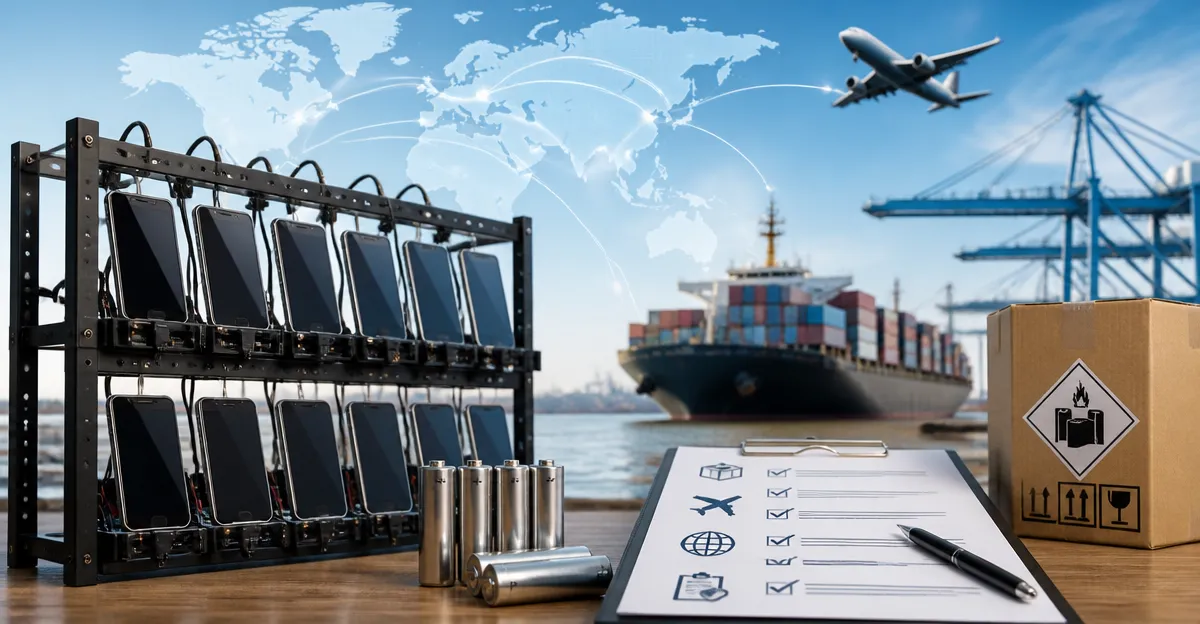
How to Ship Smartphone Rigs and Lithium Batteries Internationally: Step‑by‑Step Checklist & Compliance Guide
Introduction
Shipping high‑performance smartphone rigs together with lithium batteries presents a unique regulatory challenge. This guide explains the legal landscape, prepares you for documentation, and recommends reliable battery products that meet safety standards. Readers will learn how to classify shipments, select appropriate packaging, complete customs paperwork, and avoid common pitfalls that cause delays or fines.
By the end of this article, you will have a clear, actionable checklist that can be applied to shipments destined for Europe, North America, Asia, and other major markets. The guide also integrates product recommendations from Energizer, a brand known for long‑lasting lithium cells that are widely accepted by carriers.
Background / Context
Lithium‑ion and lithium‑metal batteries are classified as hazardous materials under the International Air Transport Association (IATA) and the International Maritime Dangerous Goods (IMDG) Code. The classification depends on battery chemistry, capacity (Wh), and whether the battery is contained in equipment, packed with equipment, or shipped loose. Smartphone rigs typically contain multiple AA or AAA cells, and sometimes 123 cells for flashlights or cameras, all of which fall under the "Lithium metal batteries, small" category (UN 3090) when the watt‑hour rating is below 100 Wh.
Regulators require that shippers provide a Dangerous Goods Declaration, use UN‑approved packaging, and label the package with the appropriate hazard symbol. Failure to comply can result in shipment rejection, cargo hold damage, or severe penalties.
Understanding these rules is essential before you select a battery. Batteries that offer leak‑proof construction, long shelf life, and stable voltage are less likely to trigger safety concerns during transport.
Preparing Your Shipment
Before packing, verify the total watt‑hour rating of each battery type. For AA and AAA lithium cells, the nominal voltage is 1.5 V and the typical capacity is around 3000 mAh, resulting in a watt‑hour value well under the 100 Wh threshold. This permits "small quantity" exemptions for air freight, provided the batteries are packaged according to Section II of the IATA Lithium Battery Guidance.
Choose packaging that isolates terminals, prevents short circuits, and resists puncture. Use anti‑static bags, bubble wrap, and sturdy corrugated boxes. Include a printed statement that the contents are "Lithium metal batteries, UN 3090, small quantity".
Complete the required paperwork: a Shipper's Declaration for Dangerous Goods (if required), a commercial invoice, and a packing list that details battery model, quantity, and UN number. Many carriers offer an online portal to upload these documents before acceptance.
Finally, verify that the carrier you select accepts lithium batteries. Some low‑cost carriers prohibit them entirely, while premium services like DHL Express, FedEx International Priority, and UPS Worldwide Express have established procedures for small‑quantity lithium shipments.
Choosing the Right Battery for Your Smartphone Rig
Battery selection influences both performance and compliance. The following Energizer products are widely regarded for their leak‑proof design, extreme‑temperature tolerance, and long shelf life, all of which simplify regulatory handling.
- Energizer Ultimate Lithium AA 24-Pack – 1.5 V, up to 25 years storage, rated 4.7/5 from 38,389 reviews. Ideal for rigs requiring many AA cells for cameras, Blink security devices, and handheld tools.
- Energizer Ultimate Lithium AA 8-Pack – Compact option for smaller rigs, same voltage and temperature range, 4.7/5 rating from 74,192 reviews.
- Energizer Ultimate Lithium AAA 8-Pack – Lightweight AAA cells for remote controls, game controllers, and low‑draw devices, 4.8/5 rating from 22,509 reviews.
- Energizer 123 Lithium 6-Pack – 3 V photo batteries suitable for high‑performance flashlights and security cameras, 4.7/5 rating from 33,692 reviews.
- Energizer Ultimate Lithium AA 2-Pack – Budget‑friendly backup for critical devices, 4.7/5 rating from 21,369 reviews.
All of these batteries are manufactured with leak‑proof construction, reducing the risk of electrolyte spillage during transport. Their ability to operate from –40 °F to 140 °F also satisfies carrier requirements for temperature‑stable hazardous goods.
Comparison / Selection Guide
| Product | Pack Size | Voltage | Storage Life | Rating | Typical Use Cases |
|---|---|---|---|---|---|
| Energizer Ultimate Lithium AA 24-Pack | 24 | 1.5 V | 25 years | 4.7/5 | High‑drain devices, Blink cameras, portable routers |
| Energizer Ultimate Lithium AA 8-Pack | 8 | 1.5 V | 25 years | 4.7/5 | Home security, smoke detectors, toys |
| Energizer Ultimate Lithium AAA 8-Pack | 8 | 1.5 V | 25 years | 4.8/5 | Remote controls, handheld gaming, small flashlights |
| Energizer 123 Lithium 6-Pack | 6 | 3 V | 10 years | 4.7/5 | High‑power flashlights, DSLR cameras, smart locks |
| Energizer Ultimate Lithium AA 2-Pack | 2 | 1.5 V | 25 years | 4.7/5 | Emergency backup, critical sensors |
When selecting a battery, consider the total number of cells required, the device’s power draw, and the cost per watt‑hour. For large rigs with multiple cameras, the 24‑Pack offers the best value per cell. For occasional use or testing, the 2‑Pack provides a low‑investment entry point.
Best Practices & Tips
- Document every battery. Include model numbers, UN codes, and capacity on the packing list.
- Use UN‑approved inner packaging. Anti‑static bags combined with insulated separators prevent short circuits.
- Label correctly. Apply the lithium‑metal hazard label (orange square with a black battery symbol) on the outer box.
- Declare low‑quantity exemptions. For shipments under 2 kg of lithium metal batteries, many carriers allow a simplified declaration.
- Stay updated. IATA and IMDG regulations are revised annually; subscribe to carrier newsletters.
- Test a sample shipment. Send a single box first to confirm carrier acceptance before scaling up.
- Consider insurance. High‑value smartphone rigs benefit from cargo insurance that covers hazardous‑material incidents.
Following these steps reduces the likelihood of customs holds and protects both the product and the shipping partner.
Frequently Asked Questions
- 1. Do I need a Dangerous Goods Declaration for AA lithium batteries?
- Yes, if the batteries are shipped loose or exceed the carrier’s small‑quantity exemption. When packed with equipment, many carriers accept a simplified declaration.
- 2. Can I ship lithium batteries by sea?
- Yes, but the IMDG Code requires stricter packaging and labeling. Air freight is generally faster and less expensive for small quantities.
- 3. What is the maximum watt‑hour rating for a small‑quantity exemption?
- For lithium metal batteries, the exemption applies to cells with a rating of 100 Wh or less per battery and a total of 2 kg or 8 L per shipment.
- 4. Are the Energizer batteries compliant with UN 3090?
- All listed Energizer lithium AA, AAA, and 123 cells meet UN 3090 specifications and are approved for small‑quantity air transport.
- 5. How can I reduce shipping costs for large rigs?
- Consolidate multiple rigs into a single container, negotiate bulk rates with carriers, and use the larger battery packs (24‑Pack) to minimize the number of individual items.
- 6. What temperature range can the batteries endure during transit?
- All Energizer products operate safely from –40 °F to 140 °F, covering most air‑cargo temperature environments.
- 7. Do I need to include a battery safety data sheet?
- Providing a safety data sheet (SDS) is recommended, especially for international shipments, as many customs agencies request it.
Conclusion
Shipping smartphone rigs together with lithium batteries requires meticulous planning, accurate documentation, and compliance with hazardous‑material regulations. By following the step‑by‑step checklist, using UN‑approved packaging, and selecting reliable Energizer batteries, shippers can minimize delays and protect their high‑value equipment. Remember to stay current with IATA and IMDG updates, and always verify carrier policies before each shipment.
Products Featured in This Guide
Energizer Ultimate Lithium AA 24-Pack
Price: $41.99 | Rating: 4.7/5 (38,389 reviews)
Featured because its large pack size provides the best value for high‑drain smartphone rigs and meets UN 3090 compliance with leak‑proof construction.
Energizer Ultimate Lithium AA 8-Pack
Price: $15.99 | Rating: 4.7/5 (74,192 reviews)
Featured for compact storage and suitability for home‑security devices, offering the same safety profile as larger packs.
Energizer Ultimate Lithium AAA 8-Pack
Price: $15.99 | Rating: 4.8/5 (22,509 reviews)
Featured because its lightweight AAA cells are ideal for low‑power accessories that accompany smartphone rigs, such as remote controls.
Energizer 123 Lithium 6-Pack
Price: $13.00 | Rating: 4.7/5 (33,692 reviews)
Featured for its higher voltage (3 V) and suitability in high‑power flashlights and security cameras, expanding the rig’s capabilities.
Energizer Ultimate Lithium AA 2-Pack
Price: $7.45 | Rating: 4.7/5 (21,369 reviews)
Featured as a cost‑effective backup solution for critical sensors and emergency kits, ensuring continuous operation during transit delays.