Introduction
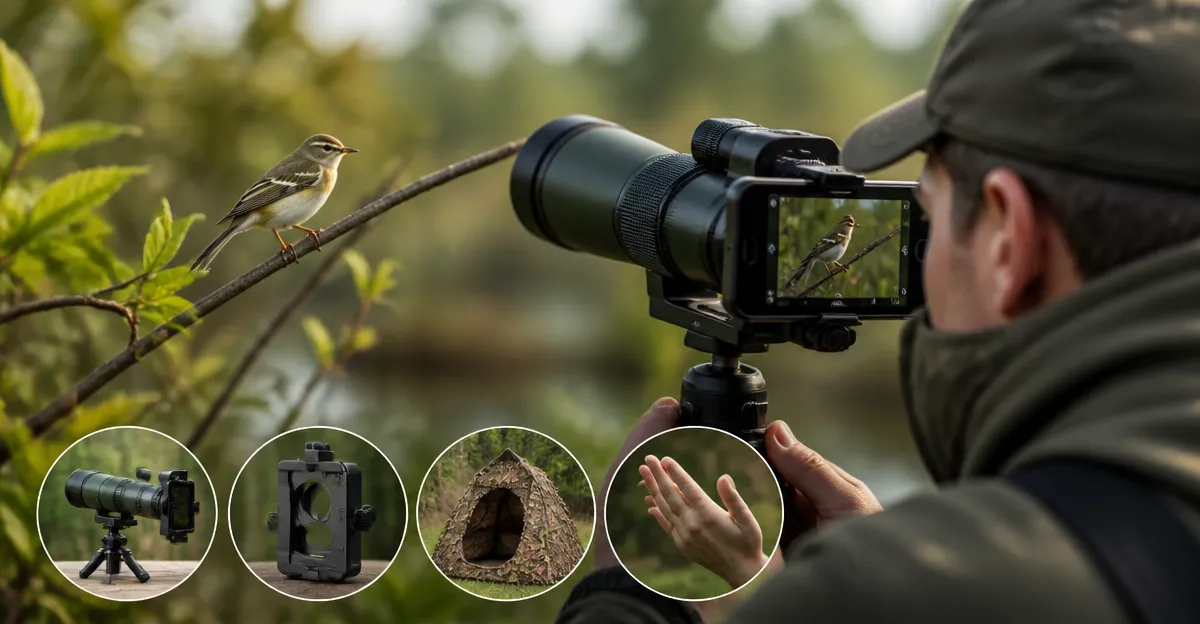
Birdwatching enthusiasts increasingly seek to capture high‑resolution images without startling their subjects. This guide explains how to combine powerful optics with a smartphone to achieve discreet, telephoto documentation. Readers will learn foundational optics concepts, ethical field behavior, and product recommendations that enhance observation while preserving wildlife comfort. By the end of the article, one will possess a clear plan for a low‑disturbance, technology‑enabled birdwatching experience.
Background and Context
Traditional birdwatching relied on binoculars and spotting scopes, tools that provide magnification but lack digital capture capability. Modern smartphones offer impressive sensor quality, yet their lenses are insufficient for distant subjects without auxiliary optics. Integrating a spotting scope or monocular with a phone adapter bridges this gap, delivering both visual clarity and photographic output. Ethical considerations remain paramount; observers must minimize noise, movement, and visual intrusion to protect avian behavior.
Choosing the Right Optics for Stealthy Birdwatching
Magnification, aperture, and build quality determine how well an optical device performs in field conditions. High magnification enables detail at 200 yards, but excessive zoom can amplify hand‑shake and reduce image stability. A moderate aperture (e.g., f/4.5‑f/5.6) balances light gathering with depth of field, essential for early‑morning observations. Waterproof and fog‑proof constructions ensure reliability in humid habitats.
Among the options, the SVBONY SV28 Spotting Scope offers an angled 25‑75×70 design, a built‑in tripod, and a phone adapter, making it a versatile starter for birders who require both magnification and stability. Its light‑waterproof, fog‑proof housing protects optics during misty dawn outings.
The 80x100 Monocular Telescope provides extreme zoom for distant raptors, paired with a high‑definition lens system. Though heavier, its smartphone adapter permits direct image capture, ideal for enthusiasts focused on rare, far‑flung sightings.
For users who prioritize portability, the 12x60 HD Monocular Telescope delivers solid magnification with a lightweight frame, smartphone adapter, tripod, and hand strap for rapid repositioning.
Two 40×60 models address specific needs: the nitrogen‑filled version with a BAK4 prism and FMC lens (40x60 Monocular Telescope (BAK4 Prism)) excels in low‑light clarity, while the low‑night‑vision variant (40x60 Monocular Telescope (Low Night Vision)) adds enhanced sensitivity for dusk activity.
Integrating a Smartphone for Telephoto Capture
Smartphone adapters typically consist of a universal eyepiece holder that aligns the phone camera lens with the optical exit pupil. Proper alignment eliminates vignetting and ensures the sensor records the full field of view. Users should secure the phone with a rubber grip to prevent slippage during wind‑induced movement.
Before heading out, calibrate the focus by selecting a distant, high‑contrast object such as a fence post. Adjust the scope’s focus knob until the image appears crisp on the phone screen, then lock the focus if the device permits. Many adapters include a quick‑release mechanism, allowing rapid transition between handheld and tripod setups.
When photographing, enable the phone’s manual exposure mode to control ISO and shutter speed, reducing noise in low‑light conditions. A tripod—often included with the SVBONY SV28—provides the stability required for longer exposures without blur.
Low‑Disturbance Field Techniques
Approach birds with a slow, deliberate gait, using natural cover such as foliage or terrain contours to mask movement. Wear muted clothing that blends with the environment; bright colors attract attention and increase stress on wildlife.
Position the optics at a low angle when possible, mimicking the bird’s eye level and minimizing the silhouette against the sky. An angled spotting scope, like the SVBONY SV28, facilitates low‑angle viewing without excessive crouching.
Limit the duration of observation to the minimum needed for documentation. Prolonged presence can alter feeding patterns and breeding behavior, undermining conservation goals.
Utilize wind direction to your advantage; approach from downwind so scent does not precede visual presence. Combine this with a quiet breathing technique to further reduce detection risk.
Comparison and Selection Guide
| Product | Magnification | Key Features | Portability | Best For |
|---|---|---|---|---|
| SVBONY SV28 Spotting Scope | 25‑75× | Angled design, tripod, phone adapter, light‑waterproof, fog‑proof | Medium | General birdwatching, beginners, versatile field use |
| 80x100 Monocular Telescope | 80‑100× | High‑definition lenses, smartphone adapter, travel‑ready case | Low | Raptor observation, distant subjects |
| 12x60 HD Monocular Telescope | 12× | Smartphone adapter, tripod, hand strap, lightweight | High | Travel, quick‑setup, casual outings |
| 40x60 Monocular Telescope (BAK4 Prism) | 40× | Nitrogen‑filled, BAK4 prism, FMC lens, high‑definition | Medium | Low‑light conditions, forest habitats |
| 40x60 Monocular Telescope (Low Night Vision) | 40× | Low night‑vision enhancement, phone adapter, tripod, hand strap | Medium | Dusk and dawn birding, concerts, travel |
Best Practices & Tips
- Pre‑assemble the smartphone adapter at home to avoid field delays.
- Carry spare batteries for both the phone and any electronic focus assist devices.
- Use a lens cleaning cloth to remove dew or dust before each session.
- Record observation notes in a field journal or a digital app to complement photographs.
- Practice silent shutter modes on the smartphone to reduce click noise.
Frequently Asked Questions
- Can I use any smartphone with these adapters? Most adapters accept phones with a camera lens diameter of 7‑12 mm; verify compatibility before purchase.
- Is a tripod necessary for high magnification? Yes, at magnifications above 40×, a stable tripod significantly reduces image shake and improves photo sharpness.
- How do I prevent fogging on the optics? Store the scope in a sealed bag with a silica gel packet and allow it to acclimate to ambient temperature before use.
- Do these devices work in low light? The BAK4‑prism model and the low‑night‑vision variant are designed for reduced illumination, offering clearer images at dusk.
- Can I record video through the smartphone adapter? Most modern phones support video capture; ensure the adapter maintains a steady focus throughout the recording.
- What legal considerations exist for photographing birds? Respect protected areas, obtain permits where required, and never disturb nesting sites.
- How often should I clean the lenses? Clean only when visibly dirty; excessive cleaning can wear coatings.
Conclusion
Stealthy smartphone birdwatching merges ethical field conduct with modern imaging technology. By selecting appropriate optics, mastering smartphone integration, and applying low‑disturbance techniques, one can capture stunning avian photographs while preserving natural behavior. The products highlighted provide reliable options for a range of budgets and environments, ensuring that every birdwatcher can enhance their observational toolkit responsibly.
Products Featured in This Guide
SVBONY SV28 Spotting Scope
Price: Not listed | Rating: Not listed
Featured for its angled 25‑75×70 magnification, built‑in tripod, phone adapter, and weather‑resistant construction, making it ideal for versatile, low‑disturbance birding.
80x100 Monocular Telescope
Price: Not listed | Rating: Not listed
Featured for its extreme 80‑100× magnification and high‑definition lenses, providing detailed views of distant raptors when paired with a smartphone adapter.
12x60 HD Monocular Telescope
Price: Not listed | Rating: Not listed
Featured for its lightweight design, 12× magnification, and inclusion of a smartphone adapter, tripod, and hand strap for rapid field deployment.
40x60 Monocular Telescope (BAK4 Prism)
Price: Not listed | Rating: Not listed
Featured for its nitrogen‑filled tube, BAK4 prism, and FMC lens, delivering high‑definition images in low‑light forest environments.
40x60 Monocular Telescope (Low Night Vision)
Price: Not listed | Rating: Not listed
Featured for its low‑night‑vision enhancement, phone adapter, tripod, and hand strap, allowing effective observation during dawn and dusk periods.