Introduction
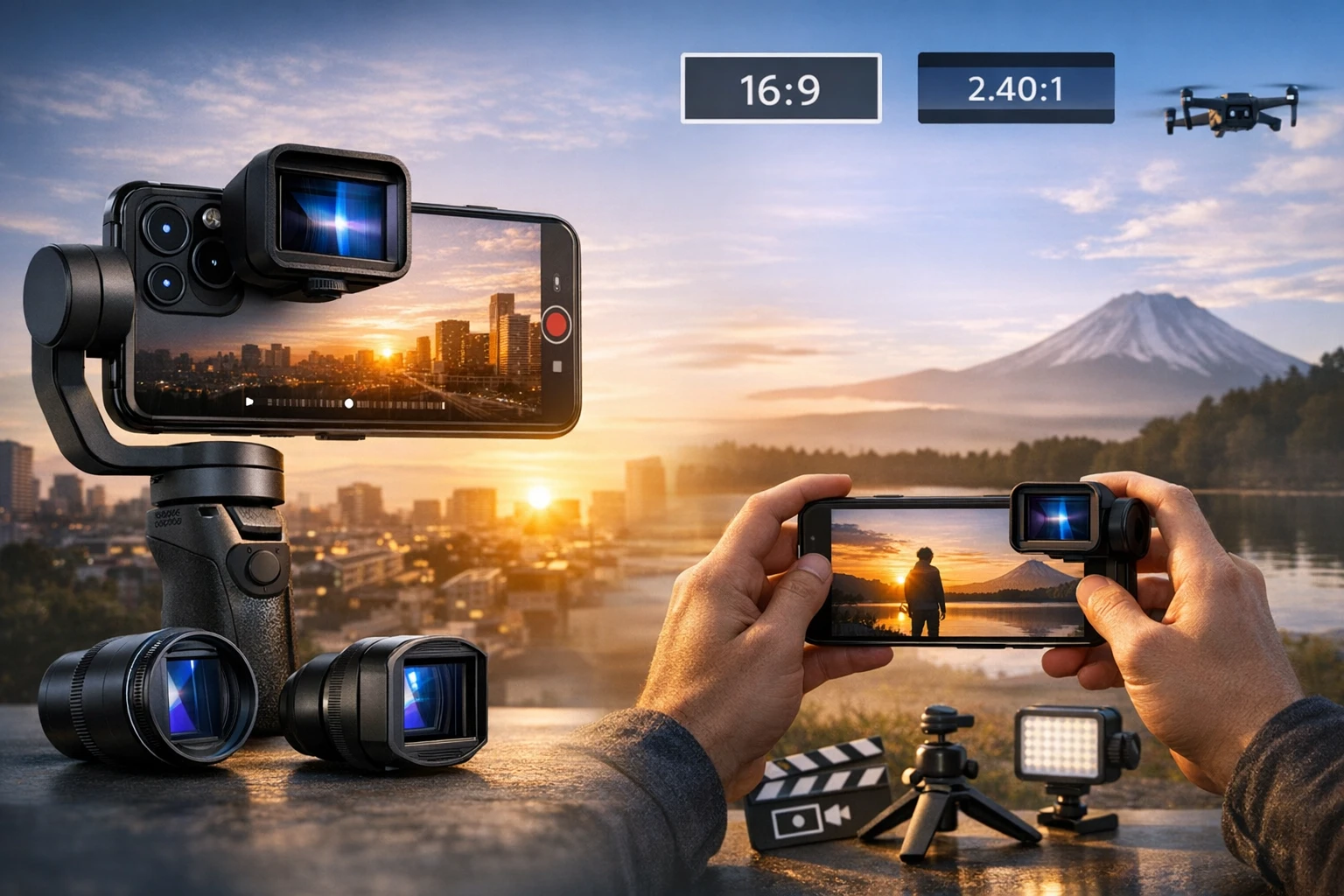
Smartphone videography has progressed from casual clips to professional‑grade productions, yet many creators still seek a cinematic look that surpasses the native field of view. Anamorphic lenses provide that signature widescreen aesthetic, allowing mobile filmmakers to capture a broader perspective with distinctive lens flares and oval bokeh. This guide explains the technical foundations of anamorphic optics, evaluates five highly rated smartphone lenses, and offers actionable shooting strategies. Readers will finish with a clear understanding of how to select, use, and maximize an anamorphic lens on any modern device.
Background
Traditional cinema lenses compress a wider image onto a standard sensor, then expand it in post‑production to achieve a 2.35:1 or wider aspect ratio. The compression factor, often expressed as 1.33x or 1.55x, determines how much horizontal information is squeezed onto the sensor. When the footage is desqueezed, the result is a dramatic widescreen frame with horizontal lens flares and a shallow depth of field that mimics film stock. Modern smartphones lack native anamorphic capability, but attachable lenses replicate the effect by placing a specially crafted optical assembly in front of the phone camera.
Understanding Anamorphic Optics
Anamorphic lenses consist of cylindrical elements that compress the image horizontally while preserving vertical resolution. This design creates a characteristic “stretch” when the footage is de‑squeezed, yielding a cinematic field of view without sacrificing image quality. The compression ratio influences the final aspect ratio: a 1.33x lens produces a 2.35:1 frame after desqueezing, whereas a 1.55x lens expands to roughly a 2.4:1 ratio, offering even more immersion. In addition to aspect ratio, anamorphic lenses generate unique flare patterns—often blue or gold—derived from the glass coatings and internal reflections.
Mobile creators must also consider the lens mount, filter compatibility, and build quality. A threaded 17 mm mount is common among premium smartphone lenses, enabling the attachment of neutral density (ND), circular polarizer (CPL), or ultraviolet (UV) filters to control exposure and color balance. Multicoated glass reduces internal reflections, preserving sharpness and contrast even in challenging lighting. Finally, a sturdy aluminum alloy housing protects the optics while keeping the unit lightweight enough for handheld operation.
Choosing the Right Anamorphic Lens
When evaluating lenses, three criteria dominate the decision process: optical compression, compatibility with the phone’s primary lens, and accessory ecosystem. The following products exemplify these criteria and have earned high user ratings on Amazon.
Neewer 1.55x Blue Anamorphic Lens
The Neewer 1.55x Blue Anamorphic Lens offers a 110% wider field of view and a 2.4:1 aspect ratio, delivering striking blue streak flares that enhance dramatic scenes. It features a universal 17 mm threaded phone clip compatible with iPhone 13‑17 series and Samsung S22‑S25 Ultra models, and includes a 58 mm filter adapter ring for ND, CPL, and UV filters. Multicoated HD optical glass with three elements in two groups ensures clarity, while the matte‑finished aluminum body resists scratches. At $75.99, the lens holds a 4.2‑star rating from 187 reviews, and only one unit remains in stock, indicating high demand.
Freewell 1.33x Gold Anamorphic Lens
The Freewell 1.33x Gold Anamorphic Lens delivers a classic 2.35:1 widescreen look with signature golden flares and an integrated level gauge for precise alignment. Its 17 mm mount attaches securely to compatible phone cases, and the lens supports third‑party desqueezing software such as Blackmagic Camera. Priced at $129.99, it carries a 4.1‑star rating from 223 reviewers, reflecting strong satisfaction among mobile cinematographers who value the warm flare palette.
Freewell 1.33x Multi‑Flare Anamorphic Lens
The Freewell 1.33x Multi‑Flare Anamorphic Lens expands creative flexibility by offering interchangeable neutral, gold, and blue flare modules within a single housing. It shares the same 17 mm mount and level gauge as the gold version, but adds a collaboration with filmmaker Steven Divish for refined optical performance. At $249.99, it maintains a 4.1‑star rating from 223 reviews, appealing to creators who require rapid flare changes without swapping lenses.
Freewell 1.33x Blue Anamorphic Lens
The Freewell 1.33x Blue Anamorphic Lens emphasizes bold blue flares and oval bokeh, providing the same 2.35:1 aspect ratio and level gauge as its gold counterpart. Its lightweight construction and straightforward twist‑in mount make it ideal for on‑the‑go shooting. The lens is priced at $129.99 and holds a 4.1‑star rating, confirming its reliability for creators who prefer a cooler flare aesthetic.
Sirui VD-01 1.33x Anamorphic Lens
The Sirui VD-01 1.33x Anamorphic Lens utilizes German Schott glass and a durable aircraft‑aluminum housing to deliver crisp images with minimal distortion. It includes a hard case, front and rear caps, and a smartphone clip that fits lenses up to 35 mm in diameter. At $69.00, it is the most affordable option in this guide, yet it retains a respectable 4‑star rating from 200 reviews, making it a solid entry point for budget‑conscious filmmakers.
By comparing compression ratios, flare characteristics, and accessory compatibility, creators can match a lens to their artistic intent and device ecosystem. Those seeking the widest field of view and distinctive blue flares may gravitate toward the Neewer 1.55x model, while users who value interchangeable flare colors should consider the Freewell Multi‑Flare lens.
Best Practices & Shooting Tips
Even the most advanced anamorphic lens cannot compensate for poor technique; therefore, mastering fundamentals is essential. First, stabilize the phone using a tripod, gimbal, or handheld rig to mitigate rolling‑shutter artifacts, especially when shooting fast motion. Second, select a fast shutter speed (1/120 s or higher) to reduce motion blur and the “jello” effect that can be exaggerated by the cylindrical optics. Third, shoot in a flat color profile such as Log or RAW if the phone supports it, allowing greater latitude during color grading and desqueezing.
During post‑production, use software that supports anamorphic desqueezing; popular choices include Adobe Premiere Pro’s “Anamorphic De‑squeeze” effect, Blackmagic DaVinci Resolve, and the free VirtualDub Deshaker filter. Apply the appropriate desqueeze factor (1.33x or 1.55x) to restore the intended aspect ratio, then add a subtle vignette to emphasize the cinematic frame. When using filters, attach ND filters to control exposure without raising ISO, preserving image quality in bright environments.
Lighting remains a critical factor; anamorphic lenses often exhibit increased flare, which can be artistic or detrimental depending on the scene. Position key lights at a 45‑degree angle to the subject to accentuate the flare without overexposing highlights. For indoor shoots, use softboxes or diffusers to maintain even illumination, ensuring the lens’s multicoated glass can render fine details without ghosting.
Finally, experiment with composition. The wider horizontal field encourages the use of leading lines, foreground elements, and negative space to guide the viewer’s eye across the frame. Embrace the oval bokeh by placing subjects at varying distances from the lens, creating a layered depth that enhances storytelling.
Frequently Asked Questions
- What is the difference between 1.33x and 1.55x compression? A 1.33x lens compresses the image less, resulting in a 2.35:1 aspect ratio after desqueezing, while a 1.55x lens provides a slightly wider field and a 2.4:1 ratio, offering more cinematic immersion.
- Can I use these lenses on any smartphone? Most lenses require a 17 mm threaded mount and are compatible with flagship iPhone and Samsung models; however, users should verify that their phone’s primary camera aligns with the lens’s optical axis.
- Do I need additional filters? Filters are optional but recommended for controlling exposure (ND), reducing reflections (CPL), or protecting the front element (UV). The Neewer lens includes a 58 mm adapter ring for such accessories.
- How do I correct rolling‑shutter artifacts? Use a stable rig, increase shutter speed, and apply rolling‑shutter repair tools in Adobe Premiere Pro or VirtualDub during post‑production.
- Is desqueezing necessary? Yes; without desqueezing, the footage appears horizontally compressed. Desqueezing restores the intended widescreen aspect ratio and reveals the characteristic anamorphic flare.
- Which lens offers the most creative flexibility? The Freewell 1.33x Multi‑Flare lens provides interchangeable flare modules, allowing creators to switch between neutral, gold, and blue effects without changing lenses.
- Are these lenses suitable for low‑light shooting? Anamorphic lenses typically reduce the effective aperture; pairing them with fast lenses, higher ISO settings, or additional lighting will yield better low‑light results.
Conclusion
Anamorphic lenses empower smartphone filmmakers to achieve a true cinematic aesthetic, delivering widescreen aspect ratios, distinctive flares, and a professional depth of field. By understanding compression ratios, mount compatibility, and accessory options, creators can select a lens that aligns with their artistic vision and budget. Coupled with proper stabilization, exposure control, and desqueezing workflows, these lenses transform everyday mobile footage into compelling visual narratives. Whether a beginner seeks an affordable entry point or a seasoned creator desires interchangeable flare colors, the products highlighted in this guide provide reliable solutions for every mobile cinematography need.
Products Featured in This Guide
Neewer 1.55x Blue Anamorphic Lens
Price: $75.99 | Rating: 4.2/5 (187 reviews)
Featured for its 1.55x compression, blue flare signature, universal 17 mm clip, and 58 mm filter adapter ring, providing a versatile solution for a wide range of smartphones.
Freewell 1.33x Gold Anamorphic Lens
Price: $129.99 | Rating: 4.1/5 (223 reviews)
Featured for its classic gold flares, integrated level gauge, and reliable 17 mm mount, delivering a true 2.35:1 cinematic frame.
Freewell 1.33x Multi-Flare Anamorphic Lens
Price: $249.99 | Rating: 4.1/5 (223 reviews)
Featured for its interchangeable neutral, gold, and blue flare modules and collaboration with Steven Divish, offering maximum creative flexibility.
Freewell 1.33x Blue Anamorphic Lens
Price: $129.99 | Rating: 4.1/5 (223 reviews)
Featured for its bold blue flares, lightweight design, and precise level gauge, ideal for creators who prefer a cooler flare aesthetic.
Sirui VD-01 1.33x Anamorphic Lens
Price: $69.00 | Rating: 4/5 (200 reviews)
Featured for its German Schott glass construction, durable aluminum housing, and affordability, providing a high‑quality entry point for mobile filmmakers.